

Singapore company formation
A premier Asian financial and trading centre combining a 17% headline corporate tax rate, common-law certainty and global connectivity.
Renowned for its pro-business governance, strategic position at the crossroads of Southeast Asian shipping and aviation routes, and English-language common-law courts, the Republic of Singapore is a flagship hub for both emerging startups and multinational headquarters. With no capital gains tax, broad double taxation agreements and streamlined ACRA digital filings, Singapore provides seamless access across Asia-Pacific markets.
Capitalite Limited helps you compare all nine Singapore market-entry and corporate vehicles — Pte Ltd, Plc, General Partnership, LP, LLP, Foreign Company Subsidiary, Branch Office, Representative Office and Sole Proprietorship — and plan Singapore-resident director, local company secretary, ACRA annual return, GST and corporate banking readiness.
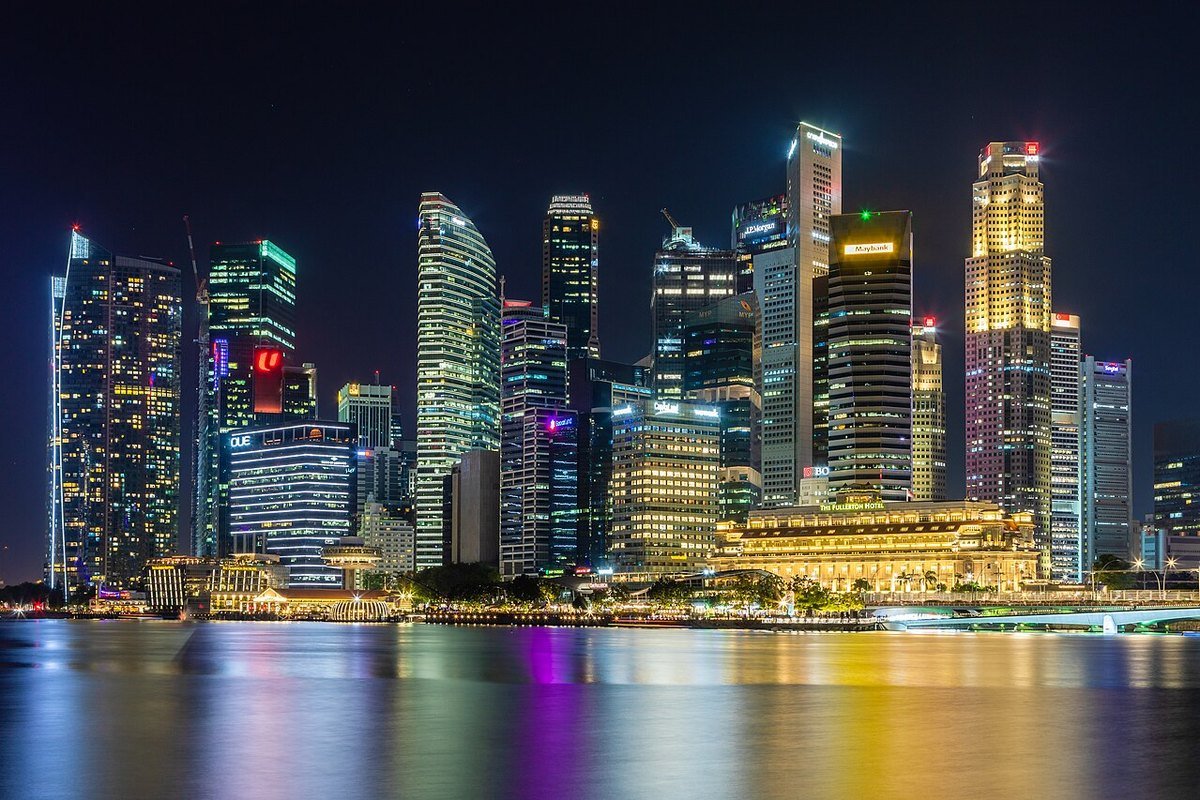
Photo: Bijay Chaurasia (CC BY-SA 4.0)
At a glance
- Structures
- Pte Ltd, Plc, GP, LP, LLP, Foreign Subsidiary, Branch Office, Representative Office & Sole Proprietorship
- Local arrangements
- Singapore registered office, at least one locally resident director, and a Singapore-resident company secretary (within 6 months)
- Ongoing duties
- Annual return with ACRA, IRAS annual tax filings & annual audit (exemptions available for qualifying small/EPC companies)
While Singapore has a 17% headline corporate tax rate and no capital gains tax, partial and start-up tax exemptions often yield lower effective tax rates, and foreign-sourced income not remitted to Singapore is generally outside local taxation subject to statutory conditions.
Why open a company in Singapore & popular sectors
Political stability, streamlined online registration, open rules for foreign ownership and targeted tax incentives make Singapore a preferred launchpad for both early-stage founders and multinational groups expanding into Southeast Asia and wider Asia-Pacific.
Leading sectors choosing Singapore include financial services and fintech, international shipping and maritime trade, IT and software development, tourism and hospitality, and biotechnology / medtech.
Choose a corporate or market-entry structure
Most commercial ventures choose a Private Limited Company (Pte Ltd, minimum S$1 share capital) for limited liability, perpetual succession, investor readiness and tax exemptions, while large businesses planning stock-exchange listings use a Public Limited Company (Plc, minimum S$50,000 share capital). Professional practices in law, accounting or consulting frequently adopt an LLP, whereas investment ventures may pair active and passive partners in an LP (or opt for simpler General Partnerships or Sole Proprietorships despite unlimited liability).
Overseas companies expanding into Singapore select between a Foreign Company Subsidiary (a resident Pte Ltd enjoying separate liability ring-fencing and local tax exemptions), a Singapore Branch Office (an extension of the parent taxed at 17% without local tax exemptions and exposing the parent to liabilities), or a non-transactional Representative Office limited strictly to market research and parent-company coordination.
Taxes, GST, tax exemptions & CFC rules
Singapore taxes corporate chargeable income at a 17% headline rate, with start-up and partial corporate tax exemptions significantly lowering effective rates for qualifying entities. Resident personal income tax scales progressively from 0% to 22%. Singapore imposes no capital gains tax, uses a single-tier corporate dividend system (avoiding double taxation of dividends), aligns the tax year with the calendar year and leverages an extensive network of double taxation treaties.
Singapore’s consumption tax is the Goods and Services Tax (GST), cited at 7% in the reference profile (noting subsequent phased statutory rate adjustments). In addition, Singapore does not enforce specific domestic Controlled Foreign Company (CFC) rules: qualifying foreign-sourced income generated outside Singapore is generally not taxed in Singapore unless remitted into Singapore (subject to statutory territorial and economic-substance conditions).
Local director, secretary, ACRA returns & audits
Every company incorporated in Singapore must appoint at least one director who is ordinarily resident in Singapore (a Singapore Citizen, Permanent Resident or eligible pass holder such as an Employment Pass). All companies must also appoint a qualified company secretary who is a Singapore resident within six months of incorporation.
Companies must file an annual return with the Accounting and Corporate Regulatory Authority (ACRA) and annual corporate tax returns with IRAS. Private limited companies generally undergo annual financial audits unless exempt as qualifying small companies or Exempt Private Companies (EPCs) meeting statutory revenue/asset/headcount thresholds (citing S$5 million annual revenue in the reference profile).
Preparing your incorporation, EP visas & banking
Before filing via ACRA BizFile, confirm the company name, SSIC business activity codes, share capital, 100% foreign or mixed shareholder breakdown, physical Singapore registered office address, and how the mandatory resident director and company secretary roles will be fulfilled (including nominee resident director arrangements or relocating a founder under an Employment Pass / EntrePass).
Singapore’s major domestic and international banks apply thorough AML/KYC, beneficial-ownership and commercial-rationale due diligence. Preparing verified KYC packs, contracts or supplier documentation and a clear Asia-Pacific business plan ahead of time supports smoother corporate account onboarding.
Singapore country & fiscal profile
Country & population
- Details
- Singapore (Republic of Singapore in Southeast Asia). Population: about 5.7 million (Source: World Bank, 2021).
Languages & time zone
- Details
- Languages: English (official, 36.9%), Mandarin (official, 34.9%), Malay (official, 10.7%), Tamil (official, 3.3%), Others (14.2%). Time zone: GMT+8.
Currency & average salary
- Details
- Currency: Singapore Dollar (S$ or SGD). Average salary: about S$5,783/month (Source: Singapore Department of Statistics, 2021).
Religion
- Details
- Buddhism, Christianity, Islam, Taoism, Hinduism, and others.
Tax regime & GST (VAT)
- Details
- Progressive resident personal income tax (0% up to 22%); 17% headline corporate tax on chargeable income (reduced effective rates with partial/start-up exemptions; no capital gains tax; single-tier dividends). Consumption tax: Goods and Services Tax (GST), cited at 7% in the baseline profile (subsequently adjusted in newer budgets).
Registry, tax & monetary authorities
- Details
- Accounting and Corporate Regulatory Authority (ACRA), Inland Revenue Authority of Singapore (IRAS), Monetary Authority of Singapore (MAS) and Economic Development Board (EDB).
Company and business types in Singapore
Private Limited Companies (Pte Ltd)
- Designations & minimum capital
- Designations: Pte Ltd, Ltd. Minimum share capital: S$1.
- Taxation notes
- 17% on chargeable income (with substantial start-up and partial exemptions available).
- Typical purpose & features
- Most prevalent commercial vehicle; offers separate legal personality, limited shareholder liability, perpetual succession, high bank/investor credibility and access to tax incentives.
Public Limited Companies (Plc)
- Designations & minimum capital
- Designations: Plc, Ltd. Minimum share capital: S$50,000.
- Taxation notes
- 17% on chargeable income.
- Typical purpose & features
- Designed for large enterprises inviting public share subscriptions or listing on the Singapore Exchange (SGX); subject to stringent disclosure and public governance standards.
General Partnership
- Designations & minimum capital
- Designations: N/A. Minimum share capital: N/A.
- Taxation notes
- Subject to personal income tax rates.
- Typical purpose & features
- Formed by two or more partners jointly running a business for profit; simple setup and direct partner control without separate legal personality, exposing partners’ personal assets.
Limited Partnership (LP)
- Designations & minimum capital
- Designations: LP. Minimum share capital: N/A.
- Taxation notes
- Subject to personal or corporate tax rates (depending on partner status).
- Typical purpose & features
- Combines active general partner(s) (unlimited liability) with passive limited partner(s) (capped at investment); flexible profit split and lighter compliance with no mandatory AGMs or directors.
Limited Liability Partnerships (LLP)
- Designations & minimum capital
- Designations: LLP. Minimum share capital: N/A.
- Taxation notes
- Taxed in partners’ hands at personal or corporate tax rates based on partner status.
- Typical purpose & features
- Separate legal entity favoured by law, accounting and consultancy practices; shields each partner from other partners’ misconduct and personal unlimited liability while preserving flexible governance.
Foreign Company Subsidiary
- Designations & minimum capital
- Designations: Pte. Ltd., Sdn. Bhd. Minimum share capital: S$1.
- Taxation notes
- 17% Corporate Tax (local tax exemptions and incentives available).
- Typical purpose & features
- Standalone Singapore Pte Ltd entity owned by an overseas parent; ring-fences parent-company liability and enjoys resident tax exemptions, treaties and IP protections for Asian growth.
Foreign Company Singapore Branch Office
- Designations & minimum capital
- Designations: N/A. Minimum share capital: No minimum requirement.
- Taxation notes
- 17% Corporate Tax (not eligible for local tax exemptions).
- Typical purpose & features
- Extension of the overseas parent rather than a separate legal person; useful for direct parent-linked operations or market exploration, though parent bears unlimited branch liability.
Foreign Company Representative Office
- Designations & minimum capital
- Designations: N/A. Minimum share capital: No minimum requirement.
- Taxation notes
- No taxes (no profit-making activities allowed).
- Typical purpose & features
- Temporary exploratory non-legal-entity vehicle solely for market research, feasibility analysis and coordinating parent-company liaison with low upfront commitment.
Sole Proprietorship
- Designations & minimum capital
- Designations: N/A. Minimum share capital: None.
- Taxation notes
- Based on owner’s personal income tax rate (0% to 22%).
- Typical purpose & features
- Simplest single-owner setup with minimal compliance and complete operational control, though owner and business are legally indistinguishable with full personal liability.
Advantages of setting up a company in Singapore
Strategic Location
- Details
- Situated at the crossroads of major East–West shipping and aviation corridors, providing direct access across Asia-Pacific markets.
Robust Legal Framework
- Details
- Transparent, efficient common-law judiciary with strong rule-of-law governance and active intellectual property protection.
Favorable Tax Regime
- Details
- 17% headline corporate rate with generous start-up/partial exemptions, zero capital gains tax and extensive double taxation agreements.
World-Class Infrastructure
- Details
- Top-ranked container port, Changi air hub, logistics parks and high-capacity digital connectivity supporting seamless global trade.
Skilled Workforce
- Details
- Competitive, educated and adaptable bilingual workforce reinforced by continuous skills development and global talent.
Stable Political Climate
- Details
- Long-standing political stability and predictable pro-enterprise policy continuity safeguarding multi-year business planning.
Disadvantages and challenges to consider
High Cost of Living
- Details
- As a global financial city-state, office rents, housing and specialist salaries can create steep operating overheads.
Stringent Regulations
- Details
- Strict statutory governance, AML/KYC controls and sector licensing (especially in finance and media) demand diligent compliance support.
Intense Competition
- Details
- An open, pro-business market attracts global competitors, resulting in intense rivalry across technology, finance and e-commerce.
Dependency on External Factors
- Details
- With limited domestic resources and heavy reliance on imports and international trade, Singapore is exposed to global macroeconomic and geopolitical shifts.
Private limited companies must maintain a local registered office, a Singapore-resident director and a resident company secretary; audit exemption criteria apply to qualifying small companies / exempt private companies.
Discuss your Singapore company plans with Capitalite
Tell us whether you are considering a Singapore Pte Ltd, Foreign Subsidiary, Branch, LLP or Representative Office, plus your local-director, secretary and banking needs. We will outline the practical requirements clearly.
Frequently asked questions
Why is Singapore often considered a global business hub?
Singapore pairs strategic positioning on Asia-Pacific trade and shipping routes with political stability, transparent English common-law courts, world-class port/airport/digital infrastructure, 17% corporate tax with exemptions, zero capital gains tax and extensive double taxation agreements.
What is the significance of the Company Secretary role in Singapore?
Every Singapore company must appoint a Singapore-resident company secretary within six months of incorporation (and a sole director cannot serve as the company secretary). The secretary maintains statutory registers, prepares board/shareholder resolutions, ensures timely ACRA filings and advises the board on Companies Act compliance.
How does Singapore’s tax regime benefit newly incorporated companies?
Eligible newly incorporated private companies benefit from Singapore’s Start-Up Tax Exemption (SUTE) for their first three consecutive Years of Assessment alongside Partial Tax Exemptions thereafter — reducing effective corporate tax rates well below the 17% headline rate — plus no capital gains tax and tax-exempt single-tier dividends.
What challenges might foreign entrepreneurs face when setting up in Singapore?
Key considerations include fulfilling the mandatory Singapore-resident director requirement, high commercial rental and salary costs, rigorous AML/KYC checks during bank account onboarding, work-pass quotas if relocating foreign staff, and strict compliance in regulated sectors.
What are the responsibilities of a local director in a Singapore company?
Every Singapore director — including a local resident or nominee director — carries full statutory fiduciary duties under the Companies Act: acting honestly with reasonable diligence, overseeing financial record-keeping and AGM/annual-return compliance with ACRA, and safeguarding company interests (no purely "rubber-stamp" status).
How does Singapore’s intellectual property (IP) regime support businesses?
Singapore operates one of Asia’s strongest IP frameworks through the Intellectual Property Office of Singapore (IPOS), supporting international filings via the Madrid Protocol, PCT and Hague System, strict court enforcement of patents/trademarks/copyright, and targeted innovation and IP tax allowances.
Is there any support available for startups in Singapore?
Yes. Besides the Start-Up Tax Exemption scheme, startups can explore Enterprise Singapore Startup SG founder/equity/tech grants, Economic Development Board (EDB) incentives, Enterprise Innovation Scheme deductions and EntrePass visa pathways for eligible foreign founders.
Can a foreigner own 100% of a Singapore company?
Yes. Singapore allows 100% foreign shareholding (whether by non-resident individuals or overseas corporate entities) in Private Limited Companies and Foreign Subsidiaries with no local-equity partner required.
Is it mandatory to have a local director for a Singapore company?
Yes. Under the Singapore Companies Act, every incorporated company (Pte Ltd / Plc) must appoint at least one director who is ordinarily resident in Singapore — a Singapore Citizen, Permanent Resident or eligible work-pass holder.
What are the annual filing requirements for Singapore companies?
Companies must prepare financial statements (audited unless exempt under small-company / EPC criteria), hold or dispense with an Annual General Meeting where eligible, file an Annual Return with ACRA, and submit Estimated Chargeable Income (ECI) and annual Corporate Income Tax returns (Form C-S / C) with IRAS (plus GST returns if registered).
Do I need a physical office to incorporate a company in Singapore?
Every Singapore company must have a physical registered office address in Singapore capable of receiving official notices during normal business hours (a P.O. Box cannot be used). Many startups begin with a licensed registered-office or serviced-office address before leasing dedicated premises.
Can I convert my existing business to a private limited company in Singapore?
Yes. Sole proprietorships, partnerships and LLPs registered in Singapore can transition into a Private Limited Company (Pte Ltd) by incorporating the new Pte Ltd and transferring business assets, contracts and registrations (while foreign businesses may incorporate a Singapore Subsidiary or explore statutory inward re-domiciliation where qualifying).
Company formation enquiry
Tell us where you would like to establish your company and a little about your plans. If you are unsure which jurisdiction or structure is suitable, we can discuss the available options.
Fields marked * are required.