

Latvia company formation
An EU and Eurozone Baltic hub featuring deferred 20% corporate taxation on distributed profits and streamlined SME setup.
Positioned in the heart of the Baltic Sea region, Latvia blends Northern European institutional order with agile eastern European market connectivity. As a member of both the European Union and the Eurozone, Latvia provides a euro-denominated business environment, comprehensive port, rail and IT infrastructure, and progressive regulations tailored to startups, export-oriented companies and holding groups.
Capitalite Limited helps you compare all eight Latvian business forms — Limited Liability Company (SIA), Joint Stock Company (AS), Branch Office, Representative Office, General Partnership (PS), Limited Partnership (KS), Individual Merchant (IK) and Cooperatives — and coordinate registration, VAT obligations, local accounting and corporate banking.
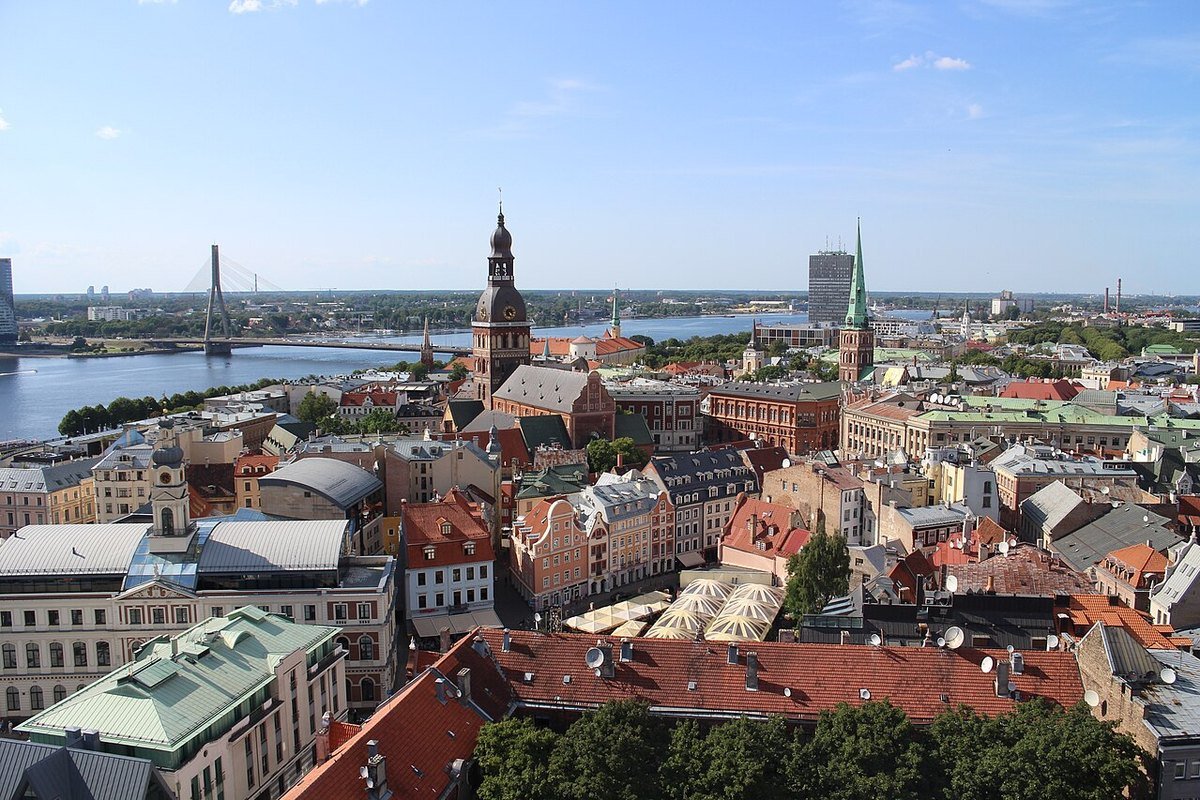
Photo: Suicasmo (CC BY-SA 4.0)
At a glance
- Structures
- SIA, AS, Branch Office, Representative Office, PS, KS, IK & Cooperatives
- Local arrangements
- Latvian registered address; no local director or company secretary strictly mandated
- Ongoing duties
- Annual return & financial statements, statutory audit above size thresholds, VAT above €40,000
Latvia applies corporate income tax only when profits are distributed (20% flat benchmark rate), encouraging reinvestment; verify micro-capital SIA timelines, CFC rules and Special Economic Zone incentives before registering.
Why open a company in Latvia & popular sectors
Latvia offers an attractive mix of EU Single Market membership, euro currency convenience, competitive operating costs and pro-growth tax deferral tailored to SMEs, technology startups and export-oriented companies.
The most popular sectors for company incorporation in Latvia include IT and software development, transport and logistics, manufacturing, agribusiness and tourism — drawing on deep-water ports, natural forestry/agricultural resources and technical talent.
Choose the right Latvian business vehicle
The Limited Liability Company (SIA) is the standard vehicle for SMEs and startups: it provides limited liability and can begin with €1 initial share capital under reduced-capital rules (reaching the standard €2,800 within a year), while deferring corporate income tax until profits are distributed. Larger enterprises seeking stock-exchange listings or substantial public capital choose a Joint Stock Company (AS, €35,000 minimum share capital).
Overseas companies can also enter Latvia via a Branch Office (taxed on Latvian-sourced profits with full parent liability) or a non-transactional Representative Office (exempt from corporate tax since it cannot conduct revenue-generating activities). Additional options include General Partnerships (PS), Limited Partnerships (KS), Sole Proprietorships (Individual Merchant / IK, taxed progressively up to 31%), and Cooperatives (€2,800 minimum capital).
Fiscal system, 20% distributed-profit tax, VAT & CFC rules
Latvia employs a transparent flat-rate corporate framework anchored at 20% on distributed profits (applying to global income when profits are distributed, while undistributed profits reinvested in the business remain untaxed). Dividend distributions to qualifying non-residents are generally tax-free, backed by Latvia’s network of double taxation treaties as well as incentives for startups, R&D and Special Economic Zones.
Latvia’s standard VAT rate is 21% (with reduced rates and exemptions for specific supplies); businesses must register for VAT once annual taxable turnover exceeds €40,000. Latvia also enforces EU-compliant Controlled Foreign Company (CFC) rules where Latvian residents hold more than 50% in foreign entities located in low-tax jurisdictions.
Governance, local requirements & annual reporting
Latvia does not strictly require a Latvian-resident director (though a local director can offer administrative convenience) and imposes no requirement to appoint a local company secretary. Foreign individuals and corporate entities can hold 100% ownership of a Latvian SIA or AS.
Every Latvian company must file an annual report containing financial statements along with updated details of shareholders and board members. Companies exceeding statutory turnover, balance-sheet total or headcount thresholds are additionally required to undergo an annual statutory audit.
Preparing registration, capital build-up & banking
Before submitting formation documents to the Enterprise Register, decide whether to fund a full €2,800 SIA share capital upfront or use the €1 starter option (if eligible), prepare notarized or e-signed incorporation instruments and UBO disclosures, and confirm whether your activity requires VAT registration or qualifies for Latvia’s Startup Law / Special Economic Zone incentives.
Latvian and Eurozone banks conduct rigorous AML/KYC, source-of-funds and commercial-substance checks, especially for non-resident shareholders. Having a clear business plan, verified identity documents and documented EU trade links greatly smooths account opening.
Latvia country & fiscal profile
Country & population
- Details
- Latvia (Baltic state in Northern Europe, EU & Eurozone member). Population: approximately 1.9 million (2021 data).
Languages & time zone
- Details
- Languages: Latvian (62%), Russian (37%), Other (1%). Time zone: GMT+2 (Standard Time), GMT+3 (Daylight Saving Time).
Currency & average salary
- Details
- Currency: Euro (€, EUR). Average salary: approximately €1,100/month (2021 data).
Religion
- Details
- Primarily Christian (Lutheran, Catholic, and Russian Orthodox).
Tax regime & VAT
- Details
- 20% flat corporate tax applied on distributed profits (retained/reinvested earnings are deferred; dividends to qualifying non-residents are tax-free; progressive personal income tax up to 31% for Individual Merchants). Standard VAT rate: 21% (registration mandatory above €40,000 annual turnover).
Registry, legislation & public portals
- Details
- Enterprise Register of the Republic of Latvia, State Revenue Service (VID), Official Legislation Portal (Likumi.lv), Latvia Official Portal and Nasdaq Baltic.
Company and entity types in Latvia
Limited Liability Company (SIA)
- Designations & minimum capital
- Designations: SIA. Minimum share capital: €2,800 (can start with €1 under reduced-capital rules, reaching €2,800 within a year).
- Taxation notes
- Corporate income tax: 20% on distributed profits (retained earnings untaxed until distribution).
- Typical purpose & features
- Most popular vehicle for SMEs, startups, family businesses and solo founders; limited shareholder liability, flexible capital rules and direct operational control.
Joint Stock Company (AS)
- Designations & minimum capital
- Designations: AS. Minimum share capital: €35,000.
- Taxation notes
- Corporate income tax: 20% on distributed profits.
- Typical purpose & features
- Built for large-scale enterprises, stock-exchange listings and public investment; supports wide shareholder pools, easy share transferability, limited liability and institutional credibility.
Branch Offices
- Designations & minimum capital
- Designations: N/A. Minimum share capital: No minimum share capital.
- Taxation notes
- Subject to corporate income tax on Latvian-sourced income.
- Typical purpose & features
- Direct extension of a foreign parent company (not a separate legal entity); allows full parent control, consolidated reporting and rapid market testing with full parent-company liability.
Representative Offices
- Designations & minimum capital
- Designations: N/A. Minimum share capital: No minimum share capital.
- Taxation notes
- Not subject to corporate income tax (may not conduct profitable commercial activities).
- Typical purpose & features
- Non-transactional local presence used strictly for marketing, promotion, market research and networking as a low-cost preparatory step; parent bears full liability.
General Partnership (PS)
- Designations & minimum capital
- Designations: PS. Minimum share capital: No minimum share capital.
- Taxation notes
- Corporate income tax: 20% on distributed profits; partners also subject to personal income tax.
- Typical purpose & features
- Formed by two or more partners carrying unlimited personal liability under a shared firm name; democratic equal voting and management flexibility suited to law, accounting and consultancy firms.
Limited Partnership (KS)
- Designations & minimum capital
- Designations: KS. Minimum share capital: No minimum share capital.
- Taxation notes
- Corporate income tax: 20% on distributed profits; partners also subject to personal income tax.
- Typical purpose & features
- Combines general partners (unlimited liability, active management) with limited partners (liability capped at capital contributed), attracting passive investors without daily operational exposure.
Sole Proprietorship (Individual Merchant or IK)
- Designations & minimum capital
- Designations: IK. Minimum share capital: No minimum share capital.
- Taxation notes
- Personal income tax on business income (progressive rate, max 31%); not subject to corporate income tax.
- Typical purpose & features
- Single-individual business ideal for freelancers and consultants wanting full control, direct single-layer taxation, simpler formalities and greater privacy, offset by unlimited personal liability.
Cooperatives
- Designations & minimum capital
- Designations: Cooperative Society, Koop. Minimum share capital: EUR 2,800.
- Taxation notes
- Corporate income tax: 20% on distributed profits; members also subject to personal income tax on dividends.
- Typical purpose & features
- Autonomous democratic association (equal one-member-one-vote governance) pooling resources and risks for farmers, housing residents or joint purchasing groups.
Advantages of setting up a company in Latvia
Strategic Geographic Location
- Details
- Serves as a Baltic logistics and commercial bridge linking Western Europe, Nordic markets and eastern trade corridors.
Member of EU & Eurozone
- Details
- Provides full access to the European Single Market with euro currency stability and harmonised EU commercial law.
Competitive Tax System
- Details
- Deferred corporate tax model (20% paid only upon profit distribution) rewards reinvestment, alongside startup, R&D and SEZ incentives.
Skilled Workforce
- Details
- Highly educated, multilingual talent pool experienced across IT, engineering, shared services, logistics and finance.
Business-friendly Environment
- Details
- Streamlined electronic company registration, transparent flat-rate tax framework and targeted support programs for startups.
Modern Infrastructure
- Details
- Ice-free deep-water Baltic ports, major road/rail corridors, Riga International Airport and fast fibre/IT connectivity.
Disadvantages and challenges to consider
Market Size
- Details
- With a domestic population under 2 million (~1.9 million), local B2C volume can be limited unless targeting wider EU exports.
Language Barriers
- Details
- Although English is widely spoken in business, local administration, contracts and staff workflows may involve Latvian or Russian.
Dependency on External Trade
- Details
- Latvia’s open economy relies significantly on EU and regional trade partners, creating sensitivity to regional macroeconomic shifts.
Regulatory Changes
- Details
- Businesses need ongoing monitoring to stay compliant with domestic tax updates, AML rules and EU directives.
Corporate tax deferral applies until profits are distributed or deemed distributed; small-company reduced-capital SIAs (€1 start) remain subject to statutory reserve and capital build-up conditions.
Discuss your Latvia company plans with Capitalite
Tell us whether you are considering a Latvian SIA, AS, Branch, Representative Office or partnership, plus your VAT and banking needs. We will clarify the practical requirements clearly.
Frequently asked questions
What are the core advantages of setting up a Limited Liability Company (SIA) in Latvia?
An SIA provides limited liability protecting personal assets, flexible start-up capital options (€2,800 standard, or starting from €1 under eligible reduced-capital rules), direct operational control without heavy public-company formalities, and tax deferral where 20% corporate tax is paid only upon profit distribution.
How does a Joint Stock Company (AS) differ from an SIA in terms of management?
An SIA has a simpler single-tier management structure (shareholders’ meeting and board of directors) suited to SMEs with €2,800 capital, whereas an AS (€35,000 minimum capital) requires a mandatory two-tier governance structure (a supervisory council overseeing the management board), stricter capital-market rules and allows publicly tradable shares.
Can foreign investors fully own a company in Latvia?
Yes. Foreign individuals and foreign legal entities can own 100% of a Latvian SIA or AS with no local equity-partner requirement, subject to standard beneficial-ownership disclosures and AML/KYC verification.
What are the tax implications for Individual Merchants in Latvia?
Individual Merchants (IK) are not subject to corporate income tax; instead, business profits are taxed directly once under Latvia’s progressive personal income tax system (up to a maximum rate of 31%) alongside applicable mandatory state social insurance contributions.
What’s the process for foreign entrepreneurs to register a company in Latvia?
The process involves choosing the legal form (typically SIA), securing a Latvian registered address, preparing founding resolutions, Articles of Association and shareholder/board/UBO disclosures (signed with qualified EU e-signature or notarized/apostilled documents), opening a temporary capital bank account where required, and submitting the application to the Enterprise Register (typically completed within a few working days).
How crucial is a local presence when setting up a company in Latvia?
Every entity must maintain an official registered address in Latvia (consent of the property owner is required unless the board confirms authority). Although a local resident director or local secretary is not legally required, practical local substance — local staff, office space or Baltic commercial ties — is important for banking onboarding, VAT registration and tax-residence credibility.
What are the primary sectors that thrive in Latvia?
Key thriving sectors are information technology (IT, SaaS and fintech), transport and Baltic logistics, wood-processing and high-value manufacturing, agribusiness and food production, and business services / tourism.
How is the intellectual property (IP) protection landscape in Latvia?
Latvia provides EU-aligned IP protection through the Patent Office of the Republic of Latvia alongside direct EUIPO (EU trademarks and designs) and European Patent (EPO) coverage, plus copyright and trade-secret enforcement under EU directives and WIPO treaties.
Are there specific incentives for foreign investors in Latvia?
Yes. Beyond zero corporate tax on reinvested earnings, Latvia offers tax rebates inside its Special Economic Zones (such as Liepāja SEZ, Rēzekne SEZ and the Riga/Ventspils freeports), Startup Law payroll-tax/co-financing incentives for qualifying startups, and EU structural and R&D grant programmes.
How easy is it to recruit local talent in Latvia? And what’s the average cost of labor?
Recruiting local specialists is relatively accessible in Riga and major hubs across IT, finance and shared services, supported by strong technical universities and multilingual skills. As noted in the profile data, the average gross salary cited in 2021 was approximately €1,100 per month (with higher market rates for senior IT/engineering roles and standard employer social-security contributions applying on top).
Can companies established in Latvia freely repatriate profits?
Yes. As an EU and Eurozone jurisdiction, Latvia imposes no currency or exchange controls on capital repatriation; after settling the 20% corporate income tax triggered at distribution, dividends paid to non-resident shareholders are generally free from additional Latvian dividend withholding tax (outside blacklisted-jurisdiction rules).
Company formation enquiry
Tell us where you would like to establish your company and a little about your plans. If you are unsure which jurisdiction or structure is suitable, we can discuss the available options.
Fields marked * are required.